

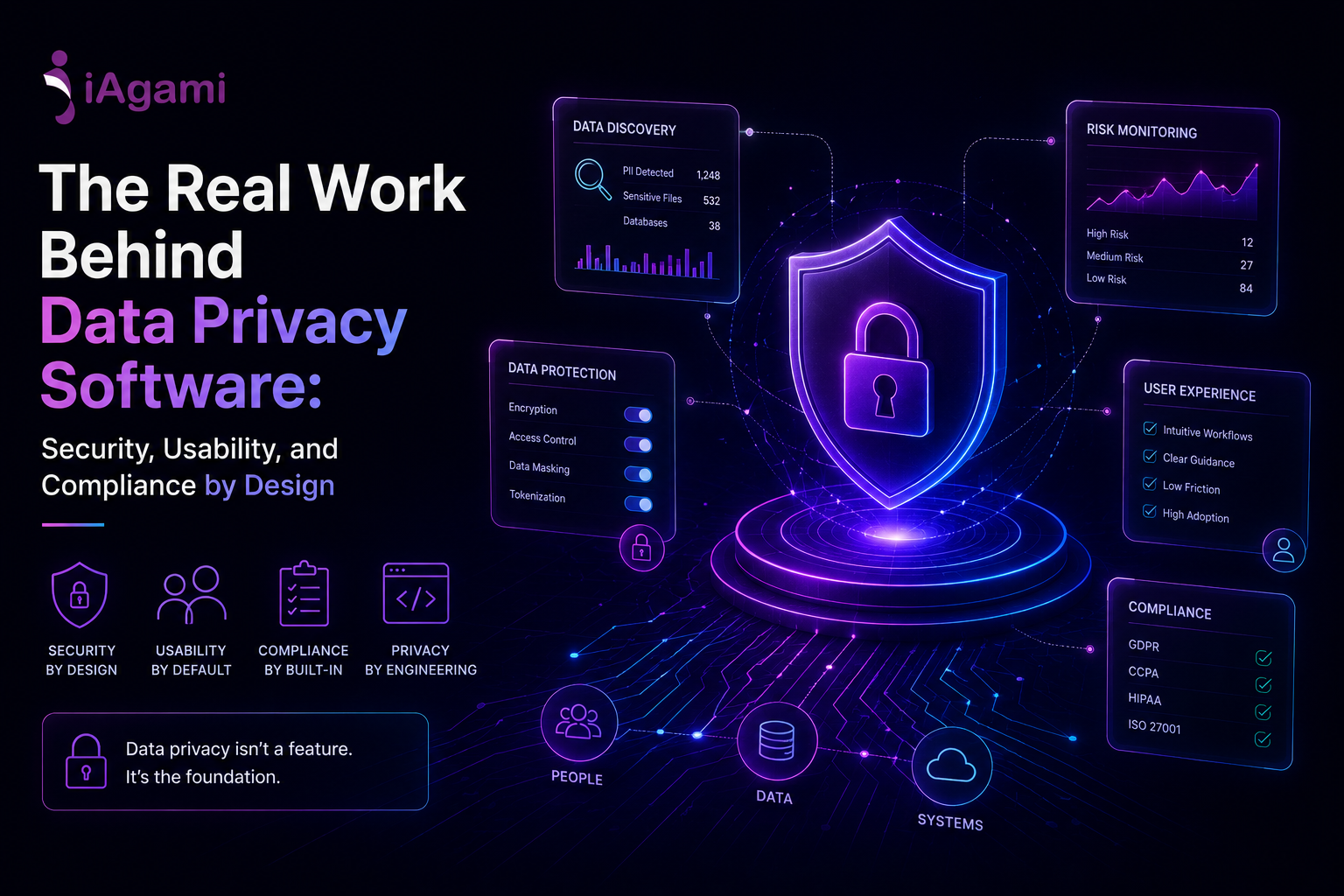
One pattern shows up almost every time a data privacy platform is evaluated. The conversation starts with redaction. How accurately can the software identify sensitive information? How quickly can it mask data? How well does it handle documents, images, records, or case files? Those are important questions. They just aren't the ones who decide whether the platform survives inside a large organization. The harder questions appear later. Can different teams access only what they are supposed to see? Can compliance officers prove what happened six months ago? Will employees actually use the system without finding workarounds? Can the platform satisfy regulators without slowing down operations?
That is where privacy software stops being a product feature and starts becoming an enterprise platform. Government agencies, healthcare organizations, and legal institutions learned this lesson years ago. The challenge was never simply protecting data. The challenge was protecting data while still allowing people to do their jobs. That balance is where most of the real engineering effort lives.
What enterprises discover after deployment
Privacy software often looks straightforward from the outside. Inside the organization, it becomes considerably more complex. The most successful platforms are rarely defined by their masking capabilities alone. They succeed because several less visible requirements were addressed from day one. Let us evaluate the top tips followed by successful organizations in this regard:
Role-based access is really about trust
Not everyone should see the same thing. That sounds obvious. Yet many privacy initiatives run into problems because access models were treated as a configuration task instead of a design requirement. A legal reviewer may need access to original records. A contractor may only need a redacted version. An administrator may require operational visibility without viewing sensitive content. When those distinctions are poorly designed, organizations start creating manual exceptions. Manual exceptions eventually become security gaps. The strongest privacy platforms make access control almost invisible to users while remaining extremely deliberate underneath.
Audit trails become important the moment something goes wrong
Most organizations don't think about auditability every day. Until they need it. A regulator requests evidence. An internal review begins. A customer raises a concern. Suddenly, everyone wants answers. Who accessed the file? What was changed? When did it happen? Privacy platforms are increasingly expected to provide those answers immediately. Not after a week of investigation. In regulated industries, proving compliance is often just as important as maintaining it.
Accessibility is no longer a nice addition
Accessibility discussions are often pushed toward the end of a project. That is becoming harder to justify. Public sector organizations, healthcare providers, and many regulated enterprises operate under accessibility obligations that cannot be ignored. A platform that works for some users but excludes others creates risk from the first day of deployment. More importantly, it creates adoption challenges. Privacy software only delivers value when people can use it comfortably and consistently.
Authentication has become a user experience question
Security teams understandably want stronger controls. Users want fewer obstacles. Both sides are usually correct. Modern privacy platforms increasingly rely on multi-factor authentication, identity federation, and single sign-on integration. The challenge is making those controls feel natural rather than disruptive. Too much friction leads to bypass behavior. Too little protection creates exposure. Finding the middle ground has become a product design exercise as much as a security exercise.
Governance determines whether the platform lasts
Many privacy projects start with technology and discover governance later. That sequence rarely works well. Questions around policy ownership, retention schedules, exception management, and regulatory alignment tend to surface after deployment. By then, changes become expensive. The organizations that achieve long-term success usually approach governance differently. They treat it as part of the platform architecture from the beginning. The result is a system that can adapt as regulations and business requirements evolve.
Cloud architecture is now part of the privacy conversation
A decade ago, privacy platforms could operate within relatively predictable environments. That world has disappeared. Data moves between cloud services, hybrid infrastructure, third-party applications, and distributed teams. Privacy software has to keep pace with all of it. Scalability matters. Resilience matters. Integration flexibility matters. Organizations no longer evaluate privacy tools in isolation. They evaluate how well those tools fit into a rapidly changing technology ecosystem.
Why do regulated industries set a higher bar?
Government, healthcare, and legal organizations often expose weaknesses that other industries overlook. A platform cannot be secure but unusable. It cannot be user-friendly but difficult to audit. It cannot satisfy compliance requirements while creating operational headaches. All three priorities must coexist.
That is why product decisions that seem minor during development often become critical after deployment. The most successful privacy platforms are not optimized around a single requirement. They are designed around competing requirements. That distinction matters.
Privacy by design is becoming product design
A noticeable shift is happening across enterprise software development. Privacy is no longer being treated as a feature added near the end of a project. It is increasingly becoming part of the architecture itself. Security reviews happen earlier. Accessibility considerations move into design discussions. Governance requirements are addressed before deployment rather than after. The result is usually a stronger product and a smoother adoption journey.
At iAgami, this shift is reflected in how privacy-focused platforms are modernized and engineered. The objective extends beyond redaction functionality to include the capabilities enterprises depend on every day—secure access controls, auditability, accessibility, governance, and cloud-scale performance. This is why we are positioned to be the apt partner for organizations looking to build world-class platforms that balance trust, usability, security, and compliance over the long term. Get in touch with us to learn more.
FAQs
1. What is data privacy software?
Data privacy software helps organizations identify, protect, redact, and manage sensitive information while meeting regulatory requirements.
2. Why is role-based access important in privacy platforms?
Role-based access ensures users only view information relevant to their responsibilities, reducing security and compliance risks.
3. What should enterprises look for beyond data redaction?
Organizations should evaluate auditability, accessibility, authentication, governance capabilities, and cloud-ready architecture alongside redaction features.