

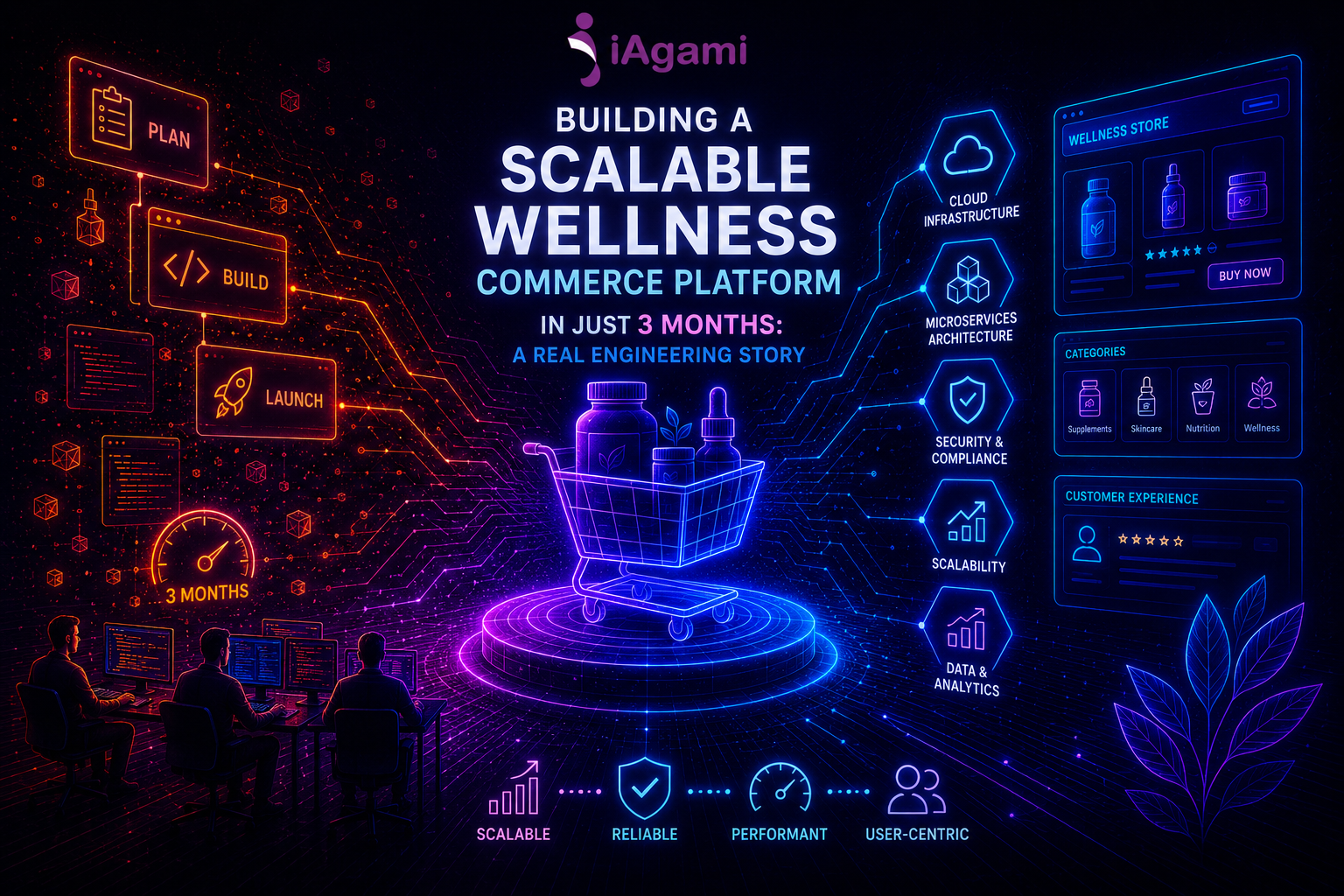
A wellness brand needed a digital commerce platform built in three months. The platform was expected to handle real traffic, manage a growing product catalogue, and maintain performance levels without a rebuild every time the business hit a new stage of growth.
The timeline was tight, and the expectations were not flexible. Yet, iAgami took on the build and launched the platform successfully. Here’s what it took.
The Challenges We Faced Along the Way
Three months does not leave much room for mistakes on a commerce platform that needs to handle real money from day one. As we began the project, we faced a few hurdles:
- Traffic for wellness brands does not grow steadily. A single campaign, a mention somewhere unexpected, or a product going viral on social media - any of these can multiply demand overnight. The architecture had to absorb that kind of spike without falling over.
- Performance has to be consistent throughout. Wellness shoppers browse on their phones constantly, often on weaker mobile networks, sometimes mid-workout or between meetings. A slow page loses the sale before the customer even sees the product.
- Product data, especially around subscriptions, bundles, and recurring content, had to have a clean structure. Otherwise, it is very likely for problems to surface months later as bugs, slow queries, or pages that just don't load right.
- Deployments needed to happen regularly after launch, without taking the site down or breaking checkout for someone mid-purchase.
Move too carefully and the deadline slips. Move too fast and the platform breaks the first week it sees real traffic. Both outcomes were unacceptable here.
How We Built the Platform
The build came together through a handful of deliberate decisions on architecture, team structure, and process, each one chosen to support a fast timeline without putting stability at risk.
- Wellness shoppers mostly make purchases on mobile. Therefore, we built the Frontend on Next.js, which gave the kind of speed and responsiveness that mobile commerce needs. This kept page loads fast and interactions smooth across devices.
- We split the backend between Node.js and Python with Django. This enabled the team to pick the right tool for each service rather than forcing every function through a single framework. This also gave the system flexibility as requirements evolved.
- We chose AWS for hosting and scaling and SQL for structured data. The infrastructure decisions we took were not trend-driven. Each one solved something specific the platform needed, and together they left room to grow without a redesign down the line.
- We assembled a lean team of ten covering design, development, testing, and deployment. Keeping the team small allowed decisions to move fast. Nobody waited two weeks for five departments to sign off on a button color, and that speed mattered more than people might expect on a three-month build.
- Sprint cycles after launch averaged 1.5 weeks. Each sprint produced working software the client could actually use and test, not a slide deck explaining what was supposed to be done. That kept everyone honest about progress and caught misalignment early instead of at the end.
- We fed user behavior data directly into development. Checkout drop-off points, weak search results, and product page scroll depth all shaped what got built next. This helped turn the roadmap into something grounded in real customer behaviour rather than internal guesses.
- We treated performance and reliability as requirements from sprint one. The system was designed to scale as demand grew without needing major architectural changes months down the line. This is why the platform could handle growth after launch without anyone having to rebuild core systems under pressure.
The Real Business Impact
iAgami launched the platform on schedule, well within the three-month window. The robust architecture, built around Next.js, Node.js, Python with Django, AWS, and SQL, and sprint cycles ensured new features were regularly shipped every 1.5 weeks. Performance stayed consistent through ongoing updates, and the brand ended up with a foundation that can keep growing instead of one it will eventually outgrow and need to replace.
Build Scalable Commerce Platforms with iAgami
This project is representative of how iAgami approaches projects. We decide on the architecture early on, so there is no temptation to cut corners under pressure. Our reliance on agile delivery means real software is developed every sprint, and performance is maintained from day one.
It is this discipline that allows us to develop, implement, and scale solutions – without having to rebuild them a year later.
If you want to strike the right balance between speed and durability, you must embrace the right architecture, invest in a small, focused team, and choose a delivery model built around real iteration.
Speak to our experts to launch your wellness platform fast and keep building on the same foundation for years afterward.
FAQs
Can a commerce platform launch in three months without sacrificing scalability?
Yes, if architecture decisions are made early and treated as fixed from the first sprint onward.
What technology stack supports fast, scalable wellness commerce?
Technologies like Next.js for the frontend, Node.js and Python with Django on the backend, AWS for hosting, and SQL for structured data are ideal for scalable wellness platforms.
How does sprint-based development keep a live platform stable?
Short, contained sprints of working software replace large, risky releases that put the whole system at risk at once.